

The world is currently facing multiple and interconnected crises, including economic, political, ecological, and geopolitical crises. These challenges are affecting countries across Asia, shrinking democratic spaces and increasing threats against Indigenous Peoples, farmers, fishers, women, youth, and persons with disabilities. The impacts are evident in rising land grabbing, displacement from traditional territories, environmental destruction, and the growing dominance of capital over natural resources, all of which further worsen community livelihoods.
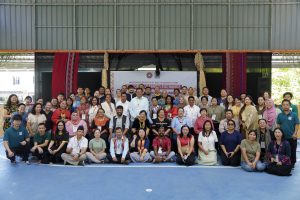
During a joint learning exchange organized by Dana Nusantara and IPAS Fund, Rukka Sombolinggi, Secretary General of AMAN, explained that although Asia is home to two-thirds of the world’s Indigenous Peoples, they remain largely invisible and marginalized. Yet Indigenous Peoples, farmers, fishers, women, youth, and persons with disabilities in Asia play a critical role in managing local livelihoods and protecting biodiversity that sustains life on Earth.
The Forest Tenure Funders Group (FTFG) reports that funding for Indigenous Peoples and Local Communities remains unevenly distributed across regions. In 2023, most regional funding was concentrated in Latin America (58%) and Africa (33%), while Asia-Pacific received only around 9%. The 2024 report showed significant improvement, with Asia-Pacific’s share increasing to 18%, while Latin America remained the largest recipient at 58% and Africa received 23%.
Jenifer Lasimbang, Executive Director of IPAS Fund, highlighted similar findings from IPAS Fund’s 2024 baseline study, which revealed that Indigenous organizations in Asia continue to face severe funding shortages. Women and youth groups experience even greater challenges, as they are often overlooked in funding priorities.
Dewi Kartika, Secretary General of KPA, noted that global funding for climate change, forest protection, and Indigenous rights has historically been difficult for communities to access directly. Lengthy bureaucratic processes, the dominance of intermediary institutions, limited organizational capacity, and language barriers often prevent funding from reaching communities effectively.
The Emergence of Direct Funding Mechanisms in Indonesia and Asia
In response to these challenges, AMAN, KPA, and WALHI began developing Dana Nusantara in 2020 as a funding mechanism aimed at strengthening people’s movements through simpler, more flexible, and trust-based funding systems.
Both Dana Nusantara and IPAS Fund seek to transform funding governance so that it better serves communities, supports struggles for land rights, environmental protection, and the safety of land defenders.
Dana Nusantara was officially launched in 2023, and direct funding operations began later that year. The mechanism applies two fundamental principles: rights-based and trust-based approaches. Dana Nusantara believes that communities are capable of managing resources responsibly and effectively.
“Fundamentally, Dana Nusantara is guided by two principles: rights-based and trust-based approaches. We believe that the initiatives we support are connected to struggles for rights and improvements in quality of life. We have demonstrated that our partners can manage funds independently, fairly, inclusively, and transparently. We believe these practices can be successfully implemented by our partners.”
— Ode Rakhman, Director of Dana Nusantara
At the regional level, the idea of establishing the IPAS Fund emerged from the need for Indigenous Peoples in Asia to have a funding mechanism led directly by Indigenous Peoples themselves and guided by grassroots visions and priorities.
In 2022, Indigenous leaders across Asia began consolidating efforts to ensure more equitable access to funding for Indigenous communities in the region. IPAS Fund developed multiple funding windows, including grassroots, sectoral, sub-national, national, emergency, and capacity-strengthening grants.
IPAS Fund functions not only as a grant-making institution but also as a movement-building fund that strengthens the capacities of Indigenous communities throughout Asia. Its approach emphasizes that funding should not merely support projects but should strengthen Indigenous movements over the long term.
“The smallest amount of money that we provide grows through inter-learning among communities. We learn from our mistakes, share our experiences, and build a shared vision. That is why the movement continues to grow. The needs on the ground are enormous, but the funds are not reaching us effectively.”
— Jenifer Lasimbang, Executive Director of IPAS Fund
Both funding mechanisms emphasize that funding itself is not the ultimate goal of the movement. Rather, funding serves as a support system that strengthens communities’ existing assets: solidarity, self-reliance, social capital, and their ability to organize and sustain themselves.
Stories of Change from Communities
As of April 2026, Dana Nusantara had distributed USD 3.3 million to support 545 initiatives across 35 provinces in Indonesia. Its greatest strength lies in its role as a support system designed to strengthen Indigenous Peoples, farmers, fishers, women, and youth movements. Success is therefore measured not only by the amount of funding distributed but by how effectively the funding contributes to strengthening people’s movements.
Similarly, IPAS Fund launched its first funding pilot in 2024 by supporting 20 initiatives in six countries. In 2025, it supported 105 initiatives with total funding reaching USD 747,000. Overall, between 2024 and 2025, IPAS Fund distributed approximately USD 847,000 to support 125 community initiatives.
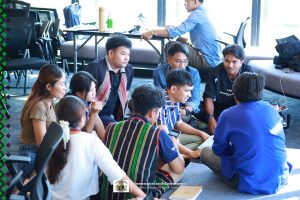
During the learning exchange, participants shared how direct funding mechanisms have strengthened their movements at the community level. Their experiences demonstrate that direct funding not only supports activities but also strengthens organizational capacity and solidarity.
Representatives from the Se’seng Toraya Indigenous community described how their initiative to restore customary territories through planting local species also became a means of intergenerational knowledge transfer.
“We are very grateful for Dana Nusantara. We held several community meetings, accompanied by the regional AMAN office, to access funding. We rehabilitated our customary territory by replanting food crops and local trees. The impact has been tremendous. The meetings inspired our community and made us realize that many people outside our community are also supporting our struggle.”
— Tridianus Kala, Se’seng Toraya Indigenous Community, South Sulawesi
Lela Sari from Serikat Petani Pasundan (SPP) in West Java shared how women farmers established ARAS Siti Halimah, a people’s education center for women, creating spaces where women can strengthen their capacities and leadership.
Women farmers from Kelompok Melawan Kapa in West Sumatra described how, despite losing their lands to large-scale oil palm plantations, they established a hydroponic melon initiative that became both an economic strategy and a source of movement strength.
Persons with disabilities in Myanmar and Nepal also reported stronger organization and advocacy efforts. Joshua from the Chin Indigenous community in Myanmar explained:
“Many people see us based on how we look, not on what we can do. But the IPAS Fund has opened opportunities for Indigenous Peoples with disabilities. Through the disability sectoral committee, Indigenous persons with disabilities can access funding more easily.
Last year, we successfully advocated for one province in Nepal to recognize intersectionality and acknowledge Indigenous persons with disabilities, women, and girls with disabilities. This happened because of the support from IPAS Fund. We are now planning to establish a regional network of Indigenous Peoples with disabilities in Asia. Empowering Indigenous persons with disabilities helps us fight for our rights and social justice.”
— Joshua, Disability Development Initiative (DDI), Myanmar
Reflections on Challenges and Strengthening Direct Funding
The implementation of direct funding at the community level inevitably faces challenges related to governance, accessibility, and implementation. During the joint learning exchange, participants reflected on these experiences to improve future direct funding mechanisms.
One important reflection was the need to ensure that direct funding strengthens movements rather than creating dependency on external resources. Participants emphasized that communities already possess strong social capital, including solidarity, mutual support, and collective action.
Yustina, a coffee farmer from Yayasan Obor Hidup Lestari in East Nusa Tenggara, emphasized the importance of movement self-reliance. Amid struggles over customary territories threatened by forest claims, she argued that funding should support community struggles rather than become their primary objective.
Participants also stressed the importance of accountable and transparent governance systems that do not burden communities with complicated administrative procedures. The simple and flexible approaches adopted by Dana Nusantara and IPAS Fund have enabled communities to focus more on implementation and movement building.
Flexibility has become one of the strongest aspects of direct funding. Communities can adjust activities according to local realities and changing conditions, reducing the risk of failure caused by rigid administrative systems. Local supporting organizations play an important role in ensuring accountability while maintaining flexibility.
Communities continue to require capacity strengthening in areas such as leadership development, organizational succession, post-harvest management, and proposal development.
At the regional level, IPAS Fund highlighted the importance of improving accessibility for Indigenous communities across Asia, including multilingual platforms and stronger regional coordination. Challenges include language diversity, administrative capacity limitations, and fiscal sponsorship mechanisms necessary for cross-border funding.
Despite these challenges, solidarity remains the foundation that enables direct funding to function effectively. Trust-based approaches help ensure that resources reach communities while maintaining accountability.
Messages for Philanthropy
To ensure fair distribution of resources, direct funding must be strengthened as a strategy to ensure that resources genuinely reach communities.
The experiences of Dana Nusantara and IPAS Fund demonstrate that solidarity and trust are the foundations of effective direct funding mechanisms. Dewi Kartika explained that Dana Nusantara emerged from a long process of consolidation and consensus-building among AMAN, KPA, and WALHI and was designed to respond directly to community needs.
It is equally important to strengthen the visibility of women and youth to ensure intergenerational justice within social movements. Boy Jerry Even Sembiring, Executive Director of WALHI, emphasized the need to support youth initiatives so that young people can lead ecological justice efforts in their own territories.
At the regional level, Jenifer Lasimbang emphasized that Indigenous Peoples in Asia remain largely invisible within the global funding architecture. Although Asia is home to the majority of the world’s Indigenous Peoples, funding flows to the region remain far below actual needs.
IPAS Fund therefore seeks not only to increase access to funding but also to strengthen recognition, representation, and capacity among Indigenous Peoples at national and regional levels. Jennifer stressed that solidarity is the movement’s greatest strength, enabling communities and organizations to continue working together despite limited resources.
Rukka Sombolinggi explained that community-led funding mechanisms emerged because global funding rarely reached grassroots communities. Dana Nusantara and IPAS Fund demonstrate that communities are fully capable of creating funding mechanisms that are accountable, effective, and responsive to community needs.
At the same time, the growing attention toward direct funding highlights the need to ensure that these mechanisms remain rooted in community leadership and avoid reproducing old systems that distance communities from decision-making processes.
Source Article (Dana Nusantara):
This article was developed based on the learning exchange between Dana Nusantara and IPAS Fund and draws upon the original article published by Dana Nusantara:
 Indonesian
  English
  Khmer
Khmer