

In Baan Suan Sai village in Nan Province, Hmong batik used to be part of daily life. Women learned it when they were young, sitting beside their mothers and grandmothers, drawing patterns with wax and dyeing fabric with indigo. It was both a skill and a way to express their identity.
Poo Hwa Seur, now nearly 80 years old, remembers those days clearly. She began making batik at the age of 14. At that time, it was her main source of income. She worked long hours, often day and night, to support her children’s education. Even though the income was small, the work was steady and meaningful.
Today, she no longer makes batik. Like many others in the village, she stopped years ago.
Why Batik is Disappearing
Over time, things began to change. In the market, stamped batik became more common. It is faster to produce and cheaper to sell. Compared to this, hand-drawn batik takes much more time and effort.
Many people in the community found that they could no longer rely on it for income. Some turned to farming, while others looked for different kinds of work that offered more stability. At the same time, younger people started leaving the village for school or jobs in the city. Fewer of them were interested in learning batik.
Gradually, the practice became less common, and the knowledge was not passed on as before.
Starting Again
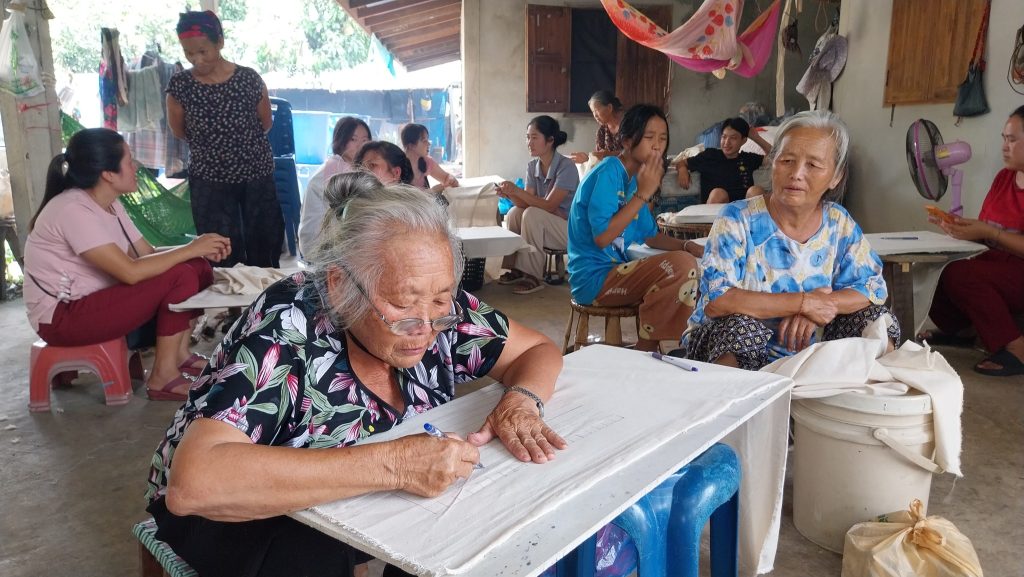
In 2025, an initiative by Hmong Nhia Tshua created an opportunity to bring people together again. Community members gathered to relearn Hmong batik. Some were trying it for the first time, while others were returning to a skill they had not practiced for many years.
They started with the basics—preparing tools, drawing simple patterns, and learning how to use the wax pen. At first, it was not easy. The wax did not always flow smoothly, and the lines were often uneven. It took time to get used to the process again.
The trainers were elders with deep knowledge, but explaining each step clearly was sometimes challenging. Even so, people continued practicing, helping each other, and slowly improving.
Learning to Adapt
As the initiative continued, the focus expanded to natural dyeing and product development. However, there were practical challenges. Many community members did not have sewing skills, and there were no sewing machines available.
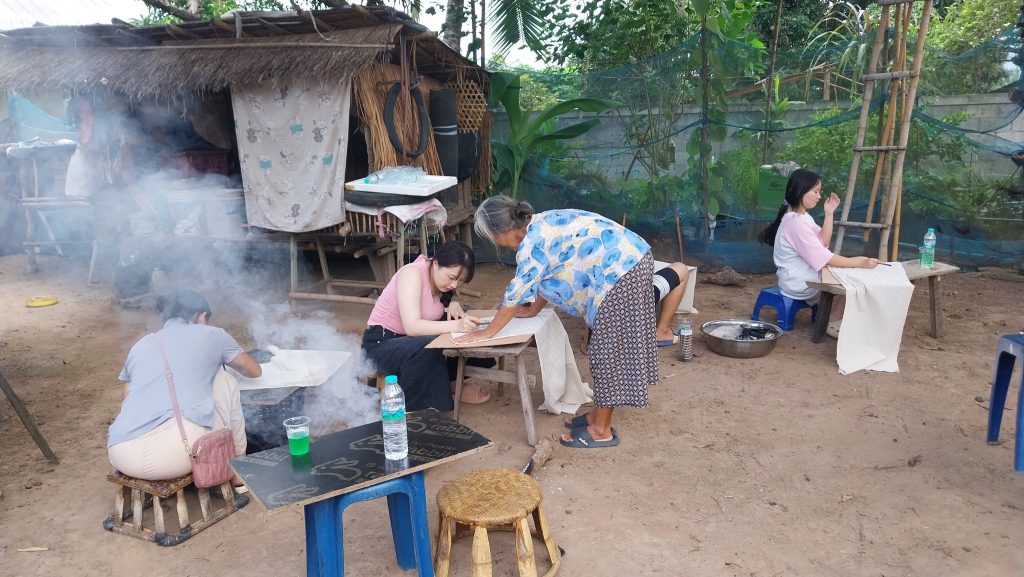
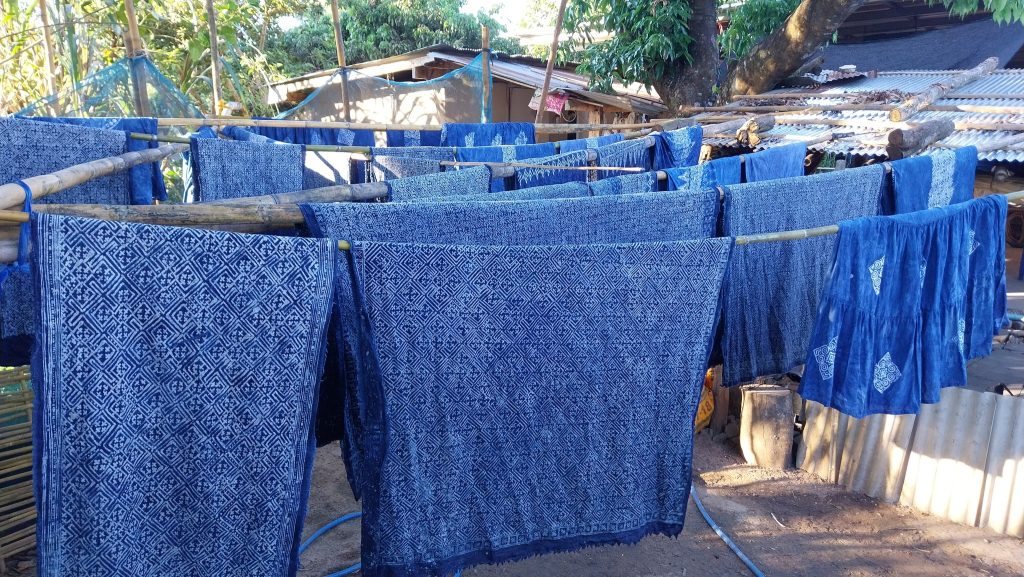
Instead of making fabric from the beginning, they worked with ready-made items such as shirts, skirts, and bags. They drew patterns with wax and then dyed the items using indigo.
The dyeing process required patience. The fabric needed to be dipped several times to achieve the desired color. After each step, it had to be dried and handled carefully. For some, this was a new experience; for others, it was a reminder of how detailed the process could be.
There were also limitations. Indigo plants were no longer grown in the village, so materials had to be brought in from elsewhere. Some traditional techniques had been forgotten over time, making the learning process more difficult.
What the Community Learned
At the end of the initiative, community members came together to reflect on their experience. They spoke about the importance of batik—not only as a source of income, but as part of their cultural identity.
They agreed that younger generations should have the chance to learn, both traditional hand-drawing and modern techniques. They also discussed the need to create new designs and products that could appeal to today’s market while still reflecting Hmong culture.
At the same time, they recognized that production should be balanced. Making too many products could lower their value, so it is important to produce carefully and thoughtfully.
Looking Ahead
This initiative has helped bring back knowledge that had almost disappeared. Community members have gained new skills and new ideas, and some are beginning to see new possibilities for using batik in their lives.
There are still challenges, especially in keeping young people interested and finding stable markets. But the community has taken an important first step.
Hmong batik in Baan Suan Sai may not return exactly as it was before, but it is slowly coming back in a new way—through shared learning, adaptation, and a continued effort to keep the tradition alive.
The initiative was led by Hmong Nhia Thsua (HNT) – a group of Hmong women who have come together to revitalize traditional knowledge of herbal medicine, food, and handicrafts. The group works to sustain community wisdom and well-being through shared learning and collaboration, while developing sustainable community-based products and passing on cultural heritage from one generation to the next.
Connect with HNT: https://web.facebook.com/hmongnhiatshua

 Indonesian
  English
  Khmer
Khmer